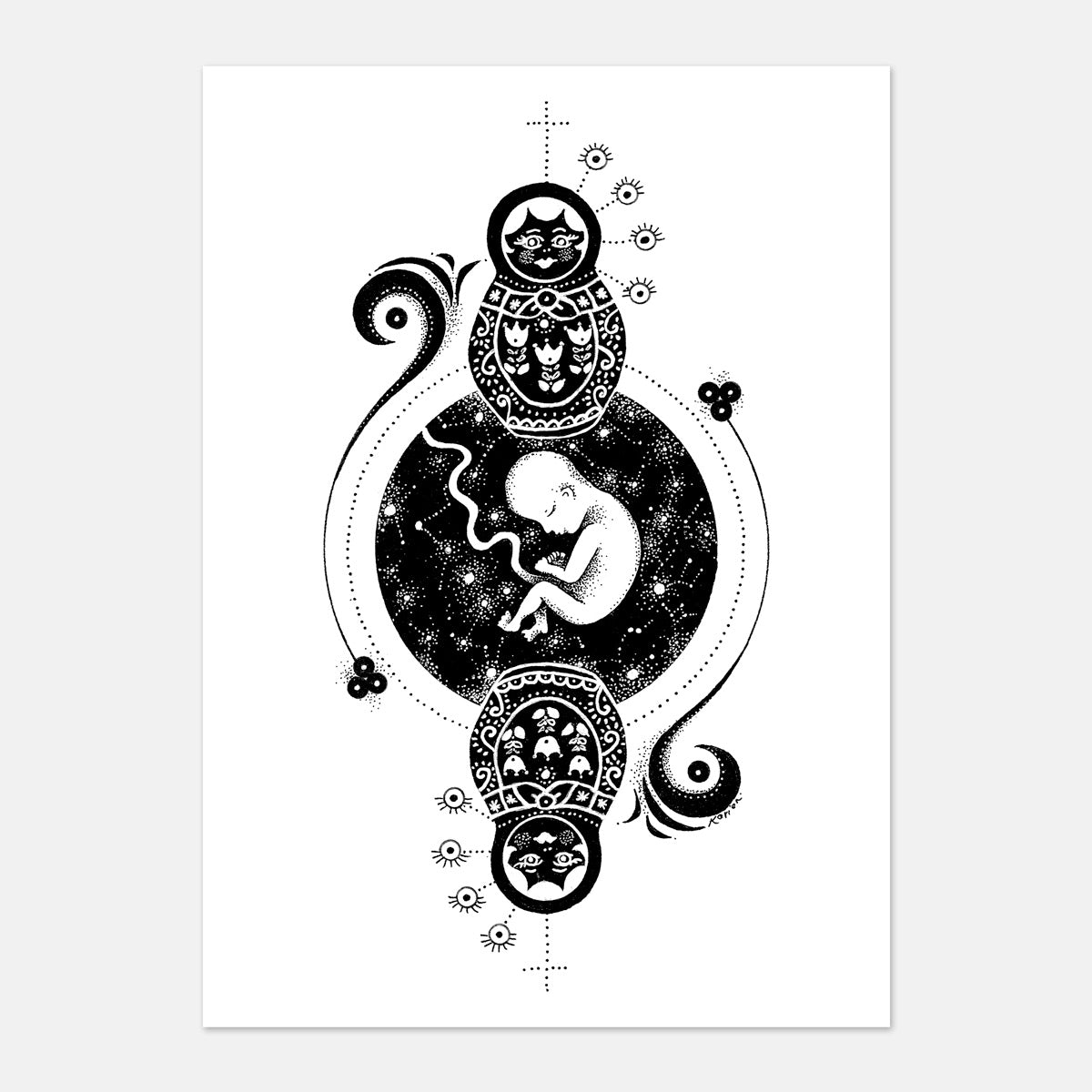

For centuries, artists have used color to evoke emotion, create atmosphere, and make powerful statements. While color is a fundamental element in art, I find the most joy in stripping it away, using only black ink on white paper. My fascination with black-and-white art inspired me to explore the symbolism behind the use of black and white in a monochrome palette.
The Symbolic Meaning of Black
Black is often associated with mystery and the unknown, but it also symbolizes strength, power, and resilience. It conveys courage and the ability to overcome adversity. In art, black can introduce drama or evoke a sense of tragedy. Paired with white, it creates a striking balance, highlighting specific elements as if under a spotlight. This contrast is particularly impactful in abstract art, where traditional color palettes are absent, allowing the interaction of black and white to dominate the visual narrative.

The Symbolic Meaning of White
White is commonly seen as a symbol of purity, innocence, and goodness. It embodies faith, hope, and spiritual enlightenment, often representing new beginnings. In art, white can foster serenity and tranquility, creating a peaceful atmosphere. It also serves as a canvas of neutrality, offering balance when paired with black. In abstract works, white provides a versatile foundation, either as a backdrop or a focal point, depending on how it interacts with other colors or shades.

Black and White Symbolism Across Cultures
Western Cultures
In Western cultures, black and white often symbolize dualities such as life and death, purity and evil, or good and bad. White is traditionally linked to purity, weddings, and peace, while black represents mourning, elegance, and mystery. These contrasts are deeply rooted in Western traditions and frequently appear in art.
Eastern Cultures
In Eastern cultures, the symbolism of black and white varies. In Chinese culture, black represents water and the north, symbolizing the unknown and potential danger, while white symbolizes metal, mourning, and death.
African Cultures
In many African cultures, black symbolizes maturity, wisdom, and authority. It is regarded as a powerful and positive color. White, however, often represents purity and the spiritual realm, frequently used in rituals and ceremonies.
Indigenous Cultures
Among Indigenous cultures, black and white carry unique and profound meanings. For instance, in some Native American tribes, black symbolizes the earth and the physical world, while white represents the sky and the spiritual world. These colors play a vital role in storytelling and ceremonial practices.

Psychological Effects of Black and White
Black: Power, Mystery, and Depth
Black is associated with power, elegance, and sophistication. It evokes mystery and depth, making it a powerful element in art. Black can draw viewers into the artwork, encouraging introspection, but it can also evoke feelings of sadness or fear, depending on its use.
White: Purity, Simplicity, and Space
White symbolizes purity, simplicity, and openness. It creates a sense of calm and clarity, often used to provide space and balance in an artwork. However, if overused, white can evoke a feeling of emptiness or coldness, highlighting the importance of balance in its application.
The Interaction of Black and White
When black and white are used together, meaning emerges through contrast rather than color. The eye moves between opposites like density and openness, presence and absence. This tension keeps the image active, allowing multiple emotional meanings to coexist instead of resolving it into a single interpretation.
Illustrations
-
Giantess: The contrast between the lotus flower and the surrounding orcas heightens a sense of isolation and inner strength, using black and white to focus attention on scale, tension, and presence.

-
La Loba: By limiting the image to black and white, the work avoids narrative closure and stays open to multiple readings.

-
Scattered Senses: Here, black and white function as opposing forces held in equilibrium, echoing themes of balance, fragmentation, and integration.

Rather than serving a purely aesthetic role, black and white allow contrast itself to carry meaning. By working within this limitation, I use contrast to explore the subconscious, inner states, and symbolic duality, leaving space for viewers to find their own meaning within the work.
Conclusion
Black and white are not simply aesthetic choices in art. They are a way of working with contrast itself. By removing color, artists reduce visual noise and bring attention to form, tension, and meaning.
Across cultures, black and white have been used to express fundamental human experiences: life and death, order and chaos, the known and the unknown. In art, this contrast creates space for interpretation. Without the guidance of color, viewers are invited to participate more actively, bringing their own emotions and associations into the work.
This is what gives black and white art its enduring power. It holds opposing ideas in the same frame and allows meaning to emerge in the space between them.
Whether encountered in drawing, photography, or printmaking, black and white imagery reminds us that clarity often comes not from adding more, but from stripping away what is unnecessary.